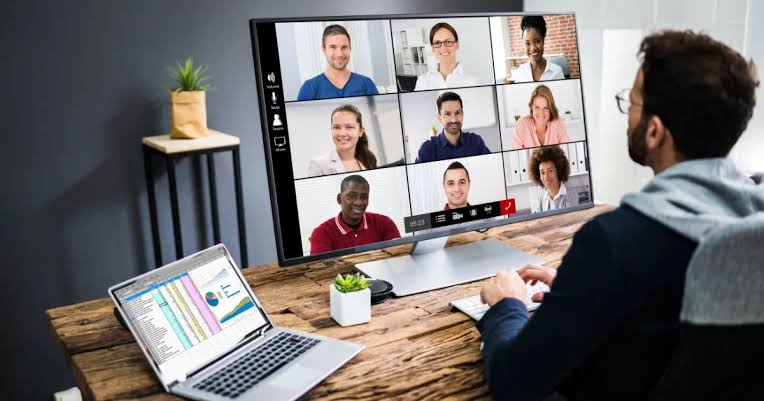
A painful gap can hide behind a successful registration campaign: hundreds of people may sign up, yet far fewer actually appear when the event goes live. That is why virtual event attendance should be treated as a separate conversion problem, not simply the final step after registration.
Current webinar guidance consistently recommends structured reminders because registrants forget, get distracted, or lose the urgency they felt when signing up. The goal is simple: turn a passive “I’ll join later” into a real commitment before the countdown reaches zero.
1. Virtual Event Attendance Starts With Better Email Sequences

A reminder should do more than repeat the event date, because sending the same message several times teaches people to ignore it. A stronger sequence changes its purpose as the event gets closer, moving from interest-building to practical preparation and finally to immediate action. ClickMeeting currently recommends a three-stage reminder structure covering the days before, the day before, and the day of the event. The important part isn’t the exact number of emails, but whether every message gives registrants a new reason to care.
Bring Back the Reason They Registered
The first reminder works best when it reconnects the audience with the original promise of the event. Instead of opening with “Your webinar is coming up,” highlight one useful takeaway, a guest speaker, a question that will be answered, or a problem attendees will finally understand. Cvent similarly recommends using earlier communication to emphasize the problem, transformation, and value rather than simply pushing another registration-style message. This is where good email sequences create anticipation rather than inbox fatigue.
Make Tomorrow Feel Concrete
The day-before message should remove uncertainty before it becomes an excuse. Give the exact start time, time zone, duration, joining method, and any preparation attendees need, with the access link easy to find. Current webinar guidance from ClickMeeting and Mailscribe both emphasizes keeping these reminders practical and making the joining action obvious. If someone has to search through a long email to find the meeting link, the reminder has already failed at its most basic job.
Use the Final Reminder for One Action
The last message should be brutally simple because attention is now more valuable than explanation. A short “Starting in one hour” message with the event name, time, and join link is usually more useful than another sales pitch. Mailscribe recommends progressively shortening reminders as the event approaches, with the closest message focused almost entirely on joining. That last-mile simplicity is one of the easiest improvements an organizer can make without spending more on advertising.
Keep SMS as a Targeted Nudge
SMS can be useful for people who have explicitly opted into mobile communication, particularly shortly before the event begins. But don’t assume every impressive vendor statistic proves SMS is automatically better than email, because the evidence for webinar-specific email-versus-SMS comparisons is limited. A 2026 review of reminder evidence notes that controlled studies have established benefits for reminders generally, but not a clean comparison proving that SMS beats webinar email. Treat SMS as a last-mile nudge, not a magic attendance button.
2. FOMO Marketing Should Give People a Real Reason to Show Up


FOMO works when missing the live session genuinely means missing something valuable. The mistake is manufacturing fake scarcity around an online event that has unlimited capacity, because audiences can smell artificial urgency from a mile away. A better approach combines fomo marketing with live-only experiences such as audience questions, voting, bonus resources, or giveaways. That makes the decision to attend feel rational rather than manipulated.
Make the Giveaway Live Only
A live giveaway creates a clear reason to be present when the winner is announced. The reward doesn’t need to be expensive, but the eligibility should be genuinely limited to people watching at that moment. Announce the timing clearly before the event so attendees know exactly when participation matters. This turns a passive registration into a small behavioral commitment.
Use a Stronger Live Experience
People are more likely to postpone an event when they know the recording will contain everything. Add something that exists only during the broadcast, such as a live Q&A, audience poll, expert response, downloadable bonus, or surprise guest. That distinction gives event retention a stronger foundation because the audience has a reason to remain connected throughout the session. The replay can still exist, but it shouldn’t completely replace the live experience.
Don’t Fake Scarcity
A countdown saying “only five seats left” makes little sense when the virtual room can accommodate thousands. Instead, use real scarcity such as a limited giveaway, a live-only offer, a fixed Q&A segment, or a speaker who will answer questions only during the broadcast. This approach keeps FOMO credible while protecting your brand from the cheap feeling of manufactured urgency. Good fomo marketing should feel like useful information about what people could miss, not psychological pressure.
Turn Attendance Into Participation
The strongest incentive isn’t always a prize because active participation itself can become the reward. Ask attendees to submit questions before the event, vote on topics, choose between discussion points, or contribute examples during the session. These small actions create psychological ownership before the broadcast even begins. Someone who has already submitted a question has a much stronger reason to return and hear the answer.
3. Measure Show Up Rate Instead of Celebrating Registrations


Registration numbers tell you how effectively you attracted interest, but they don’t tell you whether the audience actually cared enough to attend. Your core show up rate should therefore be calculated by dividing live attendees by registrants, then compared across different campaigns and audience segments. For example, 300 attendees from 500 registrations means a 60% attendance rate, while 300 from 1,000 means only 30%. The larger registration list looks better on paper, but the smaller campaign created twice the attendance efficiency.
Track these numbers after every event:
- Registration-to-attendance rate
- Reminder email clicks
- Join-link clicks
- Peak live attendance
- Average viewing time
- Chat, poll, and Q&A participation
- Replay views from no-shows
Don’t judge a reminder by open rate alone because privacy features can make that metric less reliable. Join-link clicks are more directly connected to attendance, while watch time and interaction reveal whether people stayed after entering the room. Mailscribe recommends pairing show rate with join clicks, watch time, chat, polls, and Q&A activity to understand whether reminders are producing genuine engagement.
The smartest strategy is therefore not “send more emails,” but “send better reasons at better moments.” A practical starting point is a value-focused reminder several days before the event, a clarity-focused message the day before, and a short final reminder around one hour before start time. Cvent, ClickMeeting, and current webinar guidance all support the broader principle of progressively shifting communication from value to urgency to simple attendance action.
For organizers who also need to manage attendance requirements and proof around online events, this guide on online event attendance rules and credit proof is a useful complementary reference.
Q&A
Should you send four or five reminders for every virtual event?
Not necessarily. More reminders can create fatigue, so the better approach is to test timing and message quality against your own audience. A short, relevant sequence is usually more sensible than repeatedly sending the same reminder.
What should you do when registration is high but attendance suddenly drops?
Check more than the email campaign. Compare the topic, acquisition source, audience quality, calendar timing, reminder clicks, and technical joining process because an unchanged reminder sequence doesn’t mean everything around it stayed constant.
Is a live giveaway enough to improve attendance?
No. A giveaway can strengthen the incentive to attend, but it won’t compensate for weak event value or poor communication. It works best as one part of a broader attendance strategy that combines useful content, reminders, interaction, and a genuinely different live experience.
Bottom line: registrations create a potential audience, but the reminder journey determines how many actually cross the finish line. Build each message around a different job, use real FOMO instead of fake scarcity, and judge success by attendance and engagement rather than registration volume alone.


Minh Thư Đặng has worked in virtual event support for education companies, professional associations, and regional conferences. Her responsibilities included managing registrations, sending access instructions, assisting international attendees, and resolving login problems during live sessions. She now writes straightforward guides about joining webinars, using digital tickets, entering private broadcasts, and participating in online events without confusion.